Home Connections at 25 years: Technology, Innovation and a Lasting Commitment to Ending Homelessness

celebrating 25 years
 

Celebrating 25 years · 2001–2026

For 25 years, Home Connections has worked alongside local authorities and housing providers to modernise housing services, improve access to social housing, and help some of the most vulnerable households secure a place to call home. As the organisation celebrates its silver anniversary, it is an opportunity to reflect on the role technology has played in tackling homelessness and what the future may hold.

A Vision That Became Reality

When Home Connections was founded in 2001, the housing sector was facing growing demand, increasing complexity and mounting pressures on available housing stock. Housing services were often fragmented, heavily reliant on manual processes and difficult for applicants to navigate. Access to housing was tightly controlled by housing officials.

At the centre of Home Connections was a simple vision from its founder and CEO, Ninesh Muthiah:

Ninesh Muthiah, founder and CEO of Home Connections
Ninesh Muthiah
Founder and CEO, Home Connections

“We wanted to use technology to offer choice and control to the citizen - especially in the advertising and letting of social housing. We wanted to put the housing applicant or customer in the driving seat by making them aware of what was available and letting them make the decisions. We wanted to take power away from local government officials and cede it to those who would live in the housing.”

Now Home Connections supports over 100 local authorities and housing associations across the UK. The company is uniquely owned and controlled by its customers and run on a non-profit basis.

Transforming Housing Through Choice

One of Home Connections' earliest contributions to the sector was the introduction of Choice Based Lettings (CBL) software. In 2001 housing professionals were sceptical that an IT-based system could be used by housing applicants to research and select a home of their choice. On 4 July 2002, Home Connections proved it would be successful with the first move being facilitated using CBL.

Today, Choice Based Lettings is regarded as an established part of social housing allocations, but twenty-five years ago it represented a significant shift in thinking. Instead of applicants waiting for allocations, CBL gave people visibility of available homes and the opportunity to express interest in properties that met their needs.

The result was a more transparent system that empowered applicants while helping housing providers manage allocations more effectively.
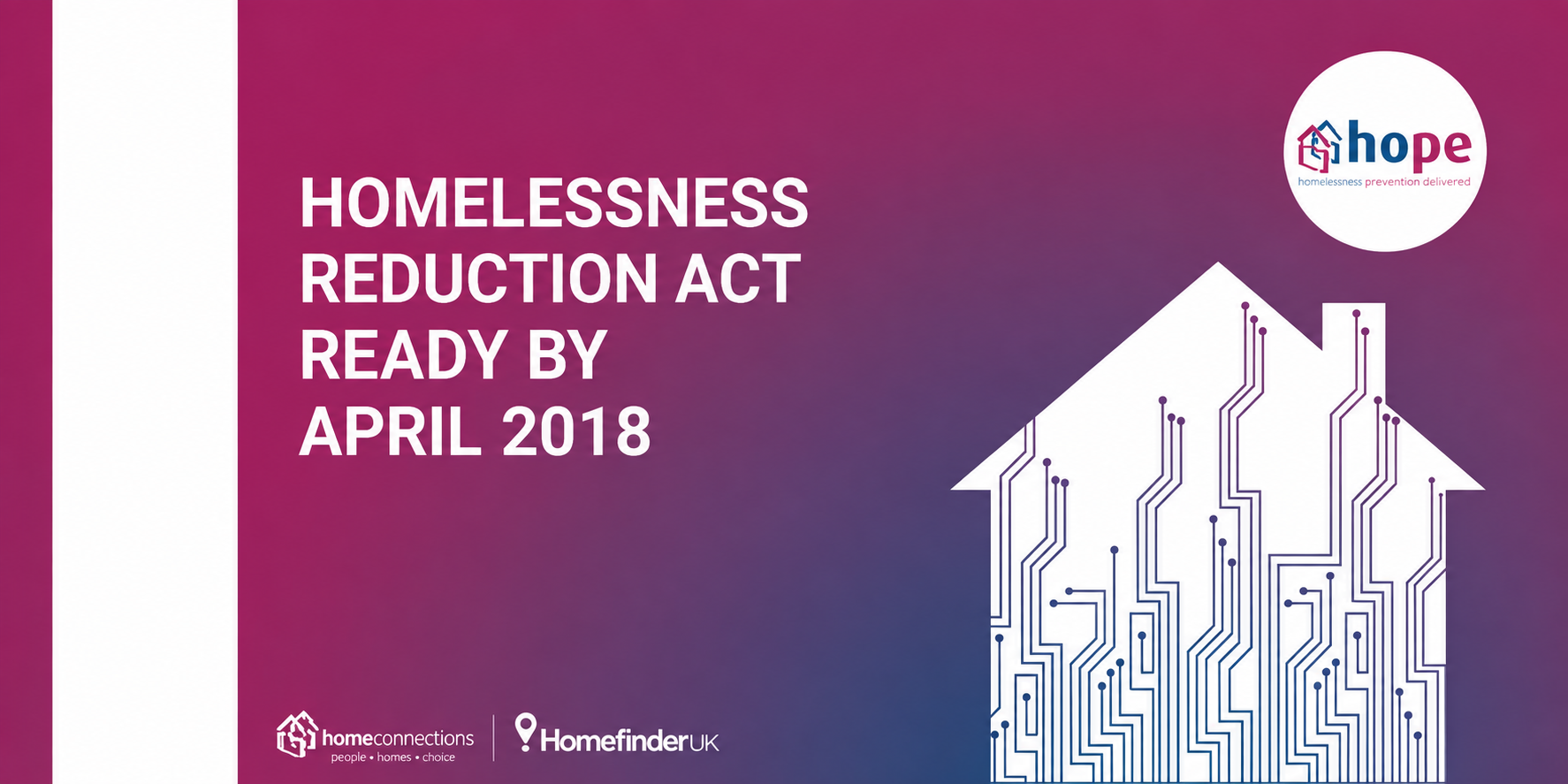
Homelessness reduction act 2017.

Technology Supporting the Fight Against Homelessness

The homelessness challenge facing the UK has changed significantly since 2001.

At a Home Connections conference in 2016, Bob Blackman, the MP behind the Homelessness Reduction Act 2017 (HRA) set out a vision for housing professionals to not just respond to homelessness but to actively prevent it.

The shift under the HRA, which came into force in April 2018, was toward early intervention, personalised support and helping people avoid crisis before it occurs.

Home Connections rapidly developed a homelessness case management system, called HOPE, to support homelessness prevention and deliver personalised housing plans and statistics to central government. One of the few companies to develop software so quickly.

The company's philosophy is that technology should support people, not replace them.

Housing officers, homelessness teams and support workers remain at the heart of service delivery. Digital tools simply help them work more efficiently, access better information and focus more time on supporting residents.

Looking Beyond Local Boundaries

One of the most significant lessons learned over the past 25 years is that housing solutions often cannot be solved within a local authority area. This is because social and affordable homes are scarce, particularly in high-demand areas, and less than 5% of private housing in the UK is affordable within Local Housing Allowance (LHA) rates.

From the outset, Home Connections sought to widen the options available to home seekers. It created a series of Housing Options ‘Wizards’ – online tools that aggregated all available housing options inside the borough and nearby.

It also established Homefinder UK, a national mobility scheme developed through a partnership of councils and housing associations.

Uniquely, Homefinder UK is the only service that offers the opportunity and hope for people to find social or affordable housing in other parts of the UK with personalised help from a case manager.

To date, more than 2,000 households have found secure permanent affordable housing through Homefinder UK, including many vulnerable households and survivors of domestic abuse – with a tenancy failure rate of less than 1%.

These achievements highlight the value of partnership working and reinforce the principle that tackling homelessness requires cooperation across local authority boundaries.

Having led the organisation for 25 years, Ninesh’s reflection on the journey remains remarkably simple:

“We had a vision and remained faithful to it and in the process have helped tens of thousands of people out of housing poverty through a variety of platforms”

Ninesh Muthiah
Founder and CEO, Home Connections

StreetLink outreach

Innovation Rooted in Social Purpose

Although Home Connections is widely recognised for its software, its work has always been driven by social impact. It has sought to make public services easier to access through language and accessibility options and a range of channels, including the internet, digital TV, text bidding, automated telephone services (IVR) and mobile apps.

From 2004/05 virtual tours and virtual reality were introduced to offer greater transparency.

Considering the socio-economic plight of housing applicants and tenants, Home Connections introduced connections to skills, training and jobs by integrating job feeds to the software. A lot of effort was put into preventing homelessness such as programmes to support cognitive behavioural therapy (CBT) to prisoners and then offering a job and a home on release. This helped establish a stable life and thereby prevent homelessness and recidivism. These past initiatives are relevant and replicable today under the new Andy Burnham (Labour) government.

To support survivors of domestic abuse (DA), Ninesh established Revive, a specialist branch of Homefinder UK. To date, it has rehoused more than 300 survivors in permanent homes across England and Scotland.

Winning a Mayor of London’s tender in 2009 led to the creation of the London Accessible Housing Register standards which have been widely emulated across the country. In partnership with Habinteg, Home Connections delivered Accessible Now, a channel of Homefinder UK dedicated to offering homes to wheelchair users.

In the autumn of 2026, the eradication of rough sleeping became the first directive of new prime minister Andy Burnham. Home Connections manages the StreetLink alert service for the MHCLG and has developed Rough Sleeper management software to better support rough sleeping case management and outcomes. Home Connections has also embraced the power of AI, which has been integrated into the StreetLink system which helps to locate reported people who may need help urgently.

Looking to the Future

Over the next twelve months, Home Connections will mark its anniversary with monthly themes exploring how technology, policy and partnerships can help address the challenges facing housing services.

These themes will include:

  • Ending rough sleeping
  • The future of Choice Based Lettings
  • Government partnerships and contracts
  • Housing mobility
  • Homelessness prevention
  • Digital transformation
  • Social impact and outcomes
  • Cross-sector collaboration

A Legacy of Housing Innovation

For 25 years, Home Connections has helped shape housing services across the UK. Behind every allocation, homelessness prevention case and successful move is a person whose life can be changed by a stable home.

The vision that inspired Home Connections in 2001 continues to guide its work: using technology and working with housing providers to help more people access safe, secure homes and prevent homelessness.


Cutting 8 Legacy Systems Down to 3: How Redbridge Transformed Its Housing Services

collaborating in office

A case study interview with Laura Kennard (Redbridge Council) 

The challenge: fragmented systems, unreliable data

Like many London boroughs, Redbridge is under significant pressure across its housing services. With one of the highest temporary accommodation caseloads in London and costs increasing across the board, the Council needed to get a firmer grip on not just its costs, but also its data and processes, with the challenge stretched well beyond homelessness alone, touching the housing register, choice-based lettings and asset management too.

Beverly Faulkner, Head of Housing Needs at Homes for Haringey

Laura Kennard, who has led the project from the council's side, explains what prompted the search for a new solution: 

"The teams weren't using the systems properly. We already had Homelessness Case Management system, HOPE, in place, but it wasn't being used very well. In addition to that, we had another system that we used for housing register and Choice Based Lettings (CBL), but we were part of a partnership which made it tricky for us to be able to manage our own destiny around that. In addition to that, we also had an internal system that was built using an Access database many years ago called TASYS, that was no longer supported, very old, very much in need of replacement.

Because it was so bespoke and in-house built, it was hard trying to find a solution that would do what we needed it to do in a challenging market. Redbridge have one of the highest Temporary Accommodation (TA) numbers in London, so homelessness and the systems that we use are quite critical. The overarching strategic goal is to reduce the spend on TA across the council - one of the ways to do that is to have better platforms, better data and better processing in place. So that was what we were trying to achieve"

The solution: integration without manual intervention

When asked how the new platform achieves this, and which features have made the biggest difference, Laura points to integration:

"The biggest aspect of what we needed was the ability to allocate people into TA, which is what the Home Connections Home Match system gives us. A key aspect of that was that it was integrated into our housing management system. [This is] so we can manage the asset part and we can manage the rent account part through a journey between the two systems, but it's all triggered through integration, and there's no manual intervention of updating records, which previously caused mismatch of data [and] incorrect H-CLIC submissions. 

The ability to get a straight answer to how many people we had in TA became very dependent on the system you looked at, and which view you had, whether you came in it from rent account or whether you came in it from placement. So, the ability to have fully integrated solutions has streamlined that process no end. We had a sign-up process previously that involved staff having to manually update nine systems to complete that process from start to finish. That has now reduced down to one."

Laura is candid that the change hasn't been easy for everyone:

"There's still some automation bits we're looking at, but [it's] a huge reduction, and actually what it's done is made our data more robust. We've had challenges since introducing this. For the staff, it's been a culture shock of... you can't just do it outside the system anymore. You can't take numbers off a local spreadsheet and report those. If you're working from emails, working from outside solutions, we're not accurately updating our data. So, it has been a shift for the teams, and I know some have kind of struggled with the restrictiveness of integration.

However, that sign-up process was taking four hours from start to finish and from a system side we've now got that under an hour end to end. Obviously, you're always going to have more complex cases [that take longer]. It's also helped us identify some massive issues with the way our data was reporting and how the systems were being used. So, we're still unpicking a lot, but it has given us a lot of good data to work with."

The impact: better data, better decisions

Redbridge has gone from eight legacy systems and streamlined that number down to three, one of which is Home Connections' platform, affecting around 250 staff members across 7–8 departments.

Person interacting with data on tablet

"By having better understanding of our data, better information in front of us, better decisions can be made. One of the things that we've now started doing is building all of the dashboards and the Power BI from that data. We've got some exciting and really interesting dashboards from that. 

You must commit to it. It's not for the faint-hearted. You've got to really want to change fundamentally at its core, and that's what this has done. It has transformed the way staff are working."

What it means for residents

Asked what difference this makes from a resident's point of view, Laura says:

"It streamlines our process, which gives the staff more time to be able to work with residents directly. It also means that we are using council money better, using our resources better because we are on top of what we're doing. 

For the individuals that are unfortunately affected by homelessness, it means that we are holding more accurate records and can support them in a more robust way, no matter what department they're talking to."

Working with Home Connections

On the relationship with Home Connections as a vendor, Laura is warm but honest about the friction along the way:

"Home Connections have always been really receptive to the ideas of what we're doing. We did push the boundaries quite a lot with this solution and what we were asking for. We've come with a problem, we've worked together to try and find a solution that is supportive. There have been some challenges along the way. The original solution we were looking for wasn't quite what we ended up with, but actually I think we've ended up with something a bit better because of that."

Dave Anteh, from Home Connections, reflects on how the scope of the work grew:

A meeting with a large amount of people collaborating

"Often I am involved with customers who tinker around the edges - which are about improving a small part of the process but actually missing a wider picture. This is where Redbridge have been more ambitious and committed to finding an overall solution improvement.

We've pushed the boundaries of what [Home Connections] do, specifically to help Redbridge, but more importantly to develop our offering to other customers as well. So, everything we're doing here benefits other customers also."

Laura agrees that the dependency of the systems created its own pressure:

"It's that dependency when you're talking integration that then becomes the dependency on a wider programme. What we've delivered between ourselves and Home Connections has been huge. From a Redbridge perspective, it affected 250 users across the council, across 7 or 8 different departments. This was huge for all involved."

Despite the challenges, her recommendation is unequivocal:

"Absolutely, I'd recommend Home Connections, and how we've worked and what you've delivered for Redbridge."

Measuring success

For Dave, success is judged on several fronts:

"Has the business improved? Has it reduced the use of spreadsheets? Customer satisfaction is key, but it can vary across your modules. A key part of success has been maintaining the trust of the council to do more with us. For Home Connections, everything we do is about that person who comes into the local authority on a Friday evening [and says] they're homeless - and ensuring they get the support and help they need in time."

For Laura, the measure of success is more personal:

"I might work in IT, but my job is about people. It is about people from start to finish. If we have done something and delivered something that makes someone's job easier, gives them better data to be able to make decisions, and is user-friendly, then that for me is success. We've achieved what we need to do. It's about the people, residents and those using it. The staff have an incredibly difficult job, managing homelessness cases is not an easy thing. They need tools that they can rely on that support them and make their lives easier. So I think as long as I've done that, then I'm happy. Can't please everyone, but hopefully majority I've got there."

Close up shot of the hands of two women

What's next

Redbridge is preparing to relaunch HOPE and is exploring AI for triaging new forms, building on a pilot already underway for StreetLink.

"We've still got some good stuff to come, and the more automation and improvement work. I think that's the stuff that will really change. But the fact that we are about to relaunch HOPE as well, I think, that's long overdue. 

In an ideal world, I would have liked to have done that first, because from the TA side, it's the starting point - if you get that right, it goes through. But you have to make some difficult decisions at certain points, and we had to stop that work so we could focus on the new CBL system, Home Match, and everything else."

Laura's advice to other councils considering a similar transformation

"Don't be afraid to look at it with new eyes - Really be sure about how everything hangs together. It's very easy to cherry pick little bits, and with that you see little change. But if you're looking for big change, you do have to go drains up and look at everything. Not every part of that will change, but you need to understand it all to know where you're going. 

Just know what you're getting into, because a programme of this size and scale is huge, and you've got to be committed to it. Otherwise, it will fall flat on its face."

Considering a similar transformation?

Talk to our team about how an integrated approach to housing management could work for your council. 

Home Connections welcome Prime Minister Andy Burnham's commitment to boost social housing and end rough sleeping before Christmas

Downing Street sign on the side of building

Home Connections welcome Prime Minister Andy Burnham's commitment to turbocharge council house building and eradicate rough sleeping.

As a leading not-for-profit organisation supporting social housing lettings across the UK, we have seen the number of council lettings decline year on year through our choice-based lettings systems. For over 25 years, Home Connections has worked with councils and housing providers to help people access social housing, giving us a unique insight into the growing gap between housing demand and supply.

Our recent white paper highlighted this challenge, including one London borough where a single one-bedroom council property received more than 200 bids. This level of demand demonstrates just how urgently more social housing is needed.

After almost 50 years of declining council housing, we hope this marks the beginning of a long-term reversal. We also believe that increasing supply should be accompanied by measures that help protect existing council housing stock, building on approaches already adopted in other parts of the UK.

Ending rough sleeping is equally important. Home Connections delivers the StreetLink service on behalf of MHCLG, helping members of the public connect people sleeping rough with local outreach teams so they can receive support quickly.

Home Connections is also continuing to develop its homelessness case management software to help local authorities better understand homelessness journeys, track outcomes and support people moving away from rough sleeping.

We have also written to the Prime Minister to offer our support through the expansion of Homefinder UK, our national housing relocation and move-on service, which has already helped almost 2,000 homeless households secure permanent accommodation across the UK.

Ninesh Muthiah, CEO of Home Connections, said:

Increasing the supply of social housing and ending rough sleeping are two of the biggest challenges facing our sector. These are issues we see every day through the work we do with councils, housing providers and government.

There isn't a single solution, but by combining investment with practical services, technology and strong partnerships, we can help more people find and sustain a safe, secure home. Home Connections stands ready to play its part.

How StreetLink uses AI to improve Rough Sleeping Alerts

AI and streetlink

An interview with John Manley, Data & Evaluation Lead at Home Connections

How can artificial intelligence make a meaningful difference to services supporting people sleeping rough?

We spoke to John Manley about the StreetLink AI pilot, what the team learned and what it could mean for the future of housing services.

Helping people provide better information

StreetLink connects people sleeping rough with local outreach services. However, the usefulness of an alert can depend on the information provided.

“People often want to help but may not know what information outreach teams need. A location might be vague or missing useful details, such as nearby landmarks or access points.

We wanted to explore whether AI could provide simple, real-time guidance to help people submit better-quality alerts without making the process more complicated.”

Supporting the reporting process

The AI provides prompts when more detail could make an alert more useful to an outreach team.

“As someone completes the form, the AI analyses the information and suggests where further detail may help. This could include nearby landmarks, entrances, clothing or other identifying information.

We also explored how AI could support alert quality assessment and prioritisation. Professional judgement, however, always remains with local authority outreach teams.

The aim isn’t to replace people or automate decisions. It’s to help people provide better information so outreach teams can work more effectively.”

Measuring the impact

The team compared pilot areas with historical performance and comparable areas where the AI features were not being tested.

39%

increase in people successfully found

Around 50%

reduction in unsuccessful outreach linked to poor-quality information

39.4%

of AI prompts shown led to improved alert quality

“The findings were encouraging. Location descriptions increased by 45% and descriptions of people by 54%. In 39.4% of cases where an AI prompt was shown, it led to an improvement in alert quality.

Most importantly, the proportion of people successfully found increased by 39%, while unsuccessful outreach linked to poor-quality information fell by around 50%.

These improvements were significantly stronger than those seen in comparable non-pilot areas, giving us confidence that the AI was making a measurable difference.”

person raising an alert

What this means for people sleeping rough

Clearer information can help outreach workers locate someone and offer support sooner.

“Technology won’t solve rough sleeping on its own, but it can remove some of the practical barriers outreach teams face.

Better information creates better opportunities to connect people with the services they need.”

What the team learned

The response from people using the AI guidance was positive.

“There’s often an assumption that AI makes systems more complicated, but our experience was the opposite. Most people found the process easy, and many said the prompts helped them provide more useful information.

Feedback from participating local authorities also helped us understand what worked and where the solution could be improved.”

What happens next?

The evaluation recommends progressing towards a wider rollout while continuing to refine the technology.

“The next phase includes further work on AI quality scoring, safeguarding detection and prioritisation. We’ll also continue working with local authorities to ensure the technology fits within their existing processes.

This isn’t the end of the journey. It’s the beginning of the next phase.”

The potential beyond StreetLink

Similar technology could support other housing services where people complete forms, submit applications or report issues.

“AI could help people provide clearer information, reduce incomplete submissions and improve the data received by frontline teams.

This could apply to homelessness applications, housing registers, repairs, temporary accommodation services and customer enquiries.

The objective remains the same: helping people provide better information so housing professionals can make better-informed decisions. AI should support people, not replace them.”

Starting with a genuine service challenge

For John, the project’s central lesson is that AI should address a clear need rather than be introduced for its own sake.

“Successful AI projects begin with a genuine service challenge, not the technology itself.

This pilot brought together Home Connections, MHCLG, local authorities and our development team.

By combining evidence, user feedback and continuous improvement, we’ve shown how AI can be introduced responsibly to improve public services.”

Learn more about StreetLink

StreetLink enables members of the public to connect people sleeping rough with local support services.

Visit the StreetLink website to learn more.

Learning, Collaborating and Connecting at LocalGov Drupal Camp 2026

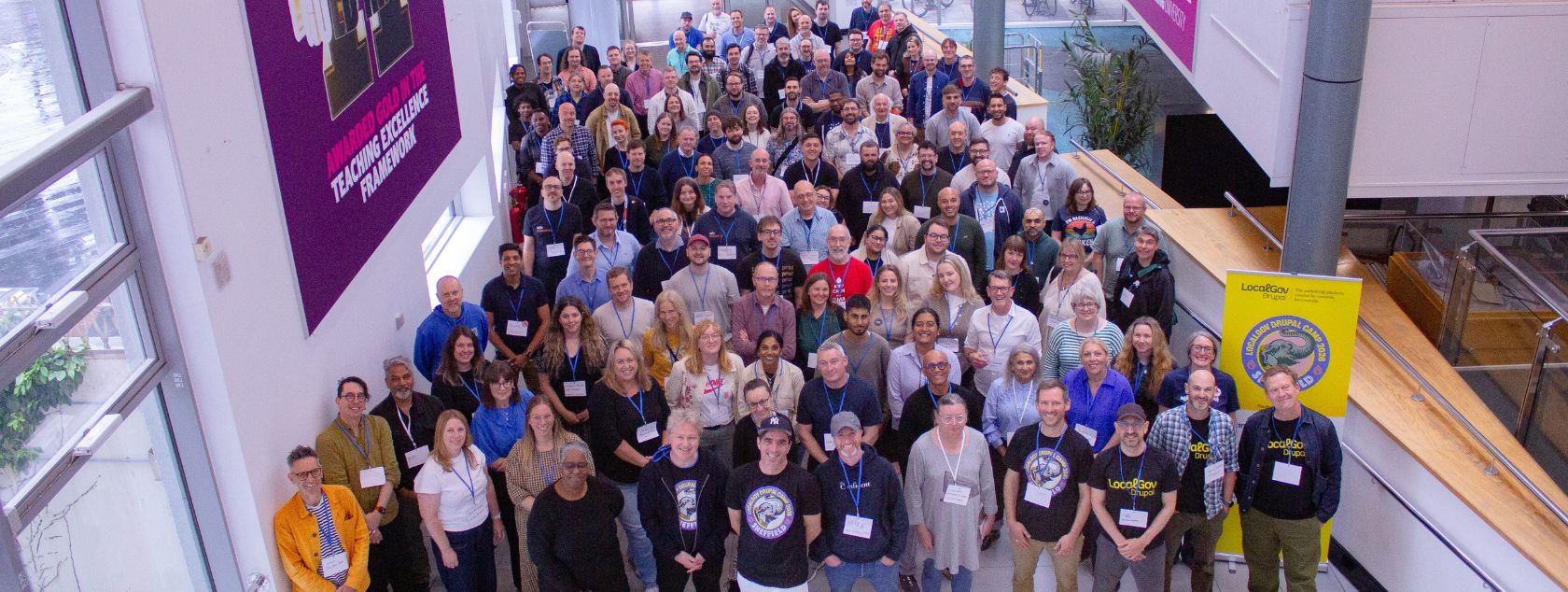
group photo

LocalGov Drupal (LGD) is an open-source content management system created by councils, for councils. Designed specifically for the public sector, it enables local authorities and public sector organisations to build accessible, user-centred and cost-effective digital services while benefiting from a collaborative community that shares knowledge, best practice and ongoing innovation.

As a not-for-profit organisation, Home Connections is proud to be an active member of the LocalGov Drupal community. We are a trusted LocalGov Drupal partner, designing, building and supporting websites and microsites for councils and public sector organisations. Today, we support more than 40 LGD websites, working closely with our customers to continually develop and improve their digital experiences. Crown Estate Scotland is one example of the websites we deliver, showcasing how LocalGov Drupal can be used to create engaging, accessible and user-focused public sector websites.

Connecting with the LocalGov Drupal community

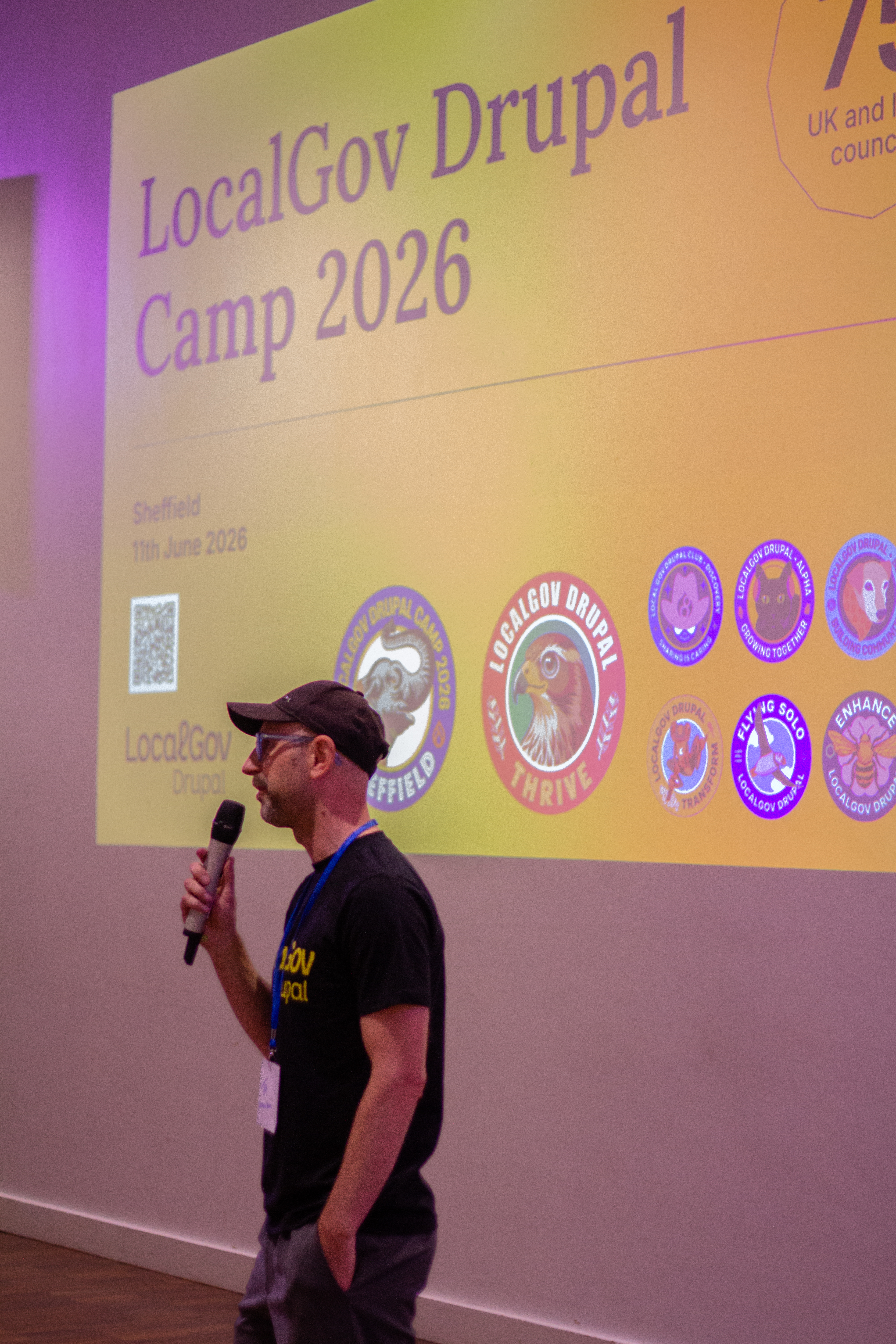
In June, the Home Connections team attended LocalGov Drupal Camp 2026 in Sheffield. Bringing together councils, suppliers and digital professionals from across the UK, the event provided an excellent opportunity to share ideas, learn from others and explore how the LocalGov Drupal community continues to evolve.

Throughout the event, we attended a range of sessions covering content design, artificial intelligence, user experience, accessibility and product development. It was particularly valuable to hear directly from councils about the challenges they face and the innovative ways they are using LocalGov Drupal to improve digital services for residents.

One of the standout themes was the growing role of artificial intelligence in local government. Sessions explored how organisations can use large language models responsibly, govern AI-powered search effectively and balance innovation with trust, security and accessibility. We also learned how councils are using user research and content design to improve online services, alongside examples of rapid digital delivery through collaborative, open-source working.

As my first LocalGov Drupal Camp, I was struck by how welcoming and collaborative the community was. Hearing how councils are using user research, accessibility and responsible AI to improve digital services gave me plenty of practical ideas and a greater appreciation for the open-source approach to innovation.

Sharon Fernando, Digital Marketing Officer

Speaker presenting at LocalGov Drupal Camp 2026
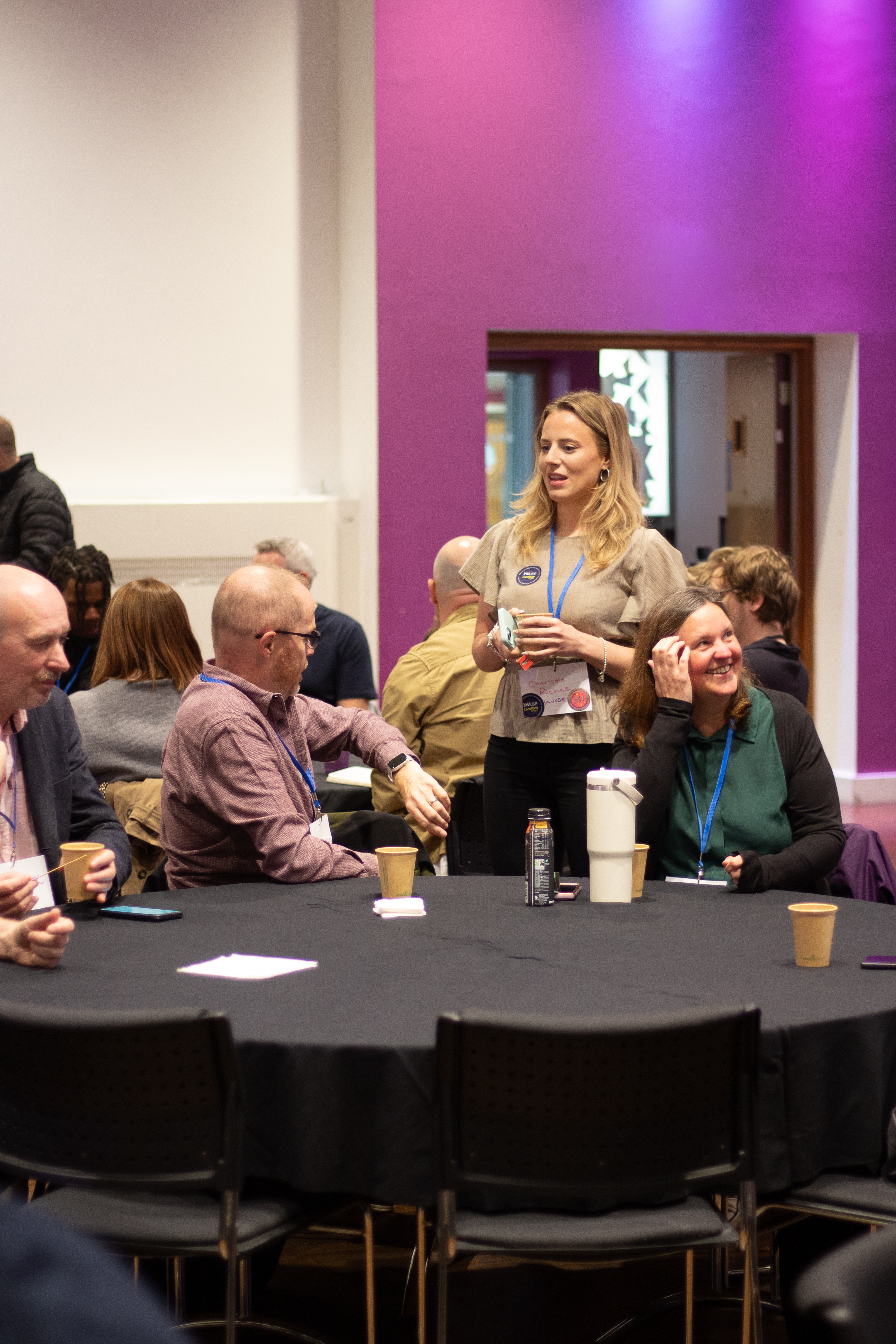
Delegates attending a session at LocalGov Drupal Camp 2026

A welcoming and collaborative atmosphere

As this was the first LocalGov Drupal Camp for some members of our team, it was a fantastic introduction to the community. We were immediately struck by the welcoming and collaborative atmosphere, with councils, suppliers and digital professionals openly sharing experiences, challenges and best practice.

The event created plenty of opportunities to network, exchange ideas and build new relationships with organisations working towards the shared goal of delivering better digital public services.

Designing better digital services

One of the sessions that particularly stood out explored building better forms in LocalGov Drupal. The Royal Borough of Greenwich shared how it has developed accessible, GDS-aligned forms while empowering content teams to manage them independently. The session reinforced the importance of designing services around user needs and collaborating across councils to develop shared solutions.

Another highlight was the session on Hackney Council's website transformation, where extensive user research and testing informed every stage of the redesign. Seeing real examples of user feedback demonstrated how evidence-based decision-making can lead to more intuitive, accessible and effective digital services.

We also attended a session on governing AI search within LocalGov Drupal, which provided practical guidance on implementing AI responsibly. The discussion highlighted the importance of governance, accountability and transparency, helping councils embrace emerging technologies while maintaining trust, accuracy and good data management.

Coming from a web development background with limited Drupal experience, the camp was an excellent introduction to the platform and the wider LocalGov community. I found it particularly valuable to see how councils are embracing AI responsibly while continuing to prioritise governance, accessibility and user trust in the digital services they deliver.

Amit Chana, Junior Developer

Supporting the growth of LocalGov Drupal

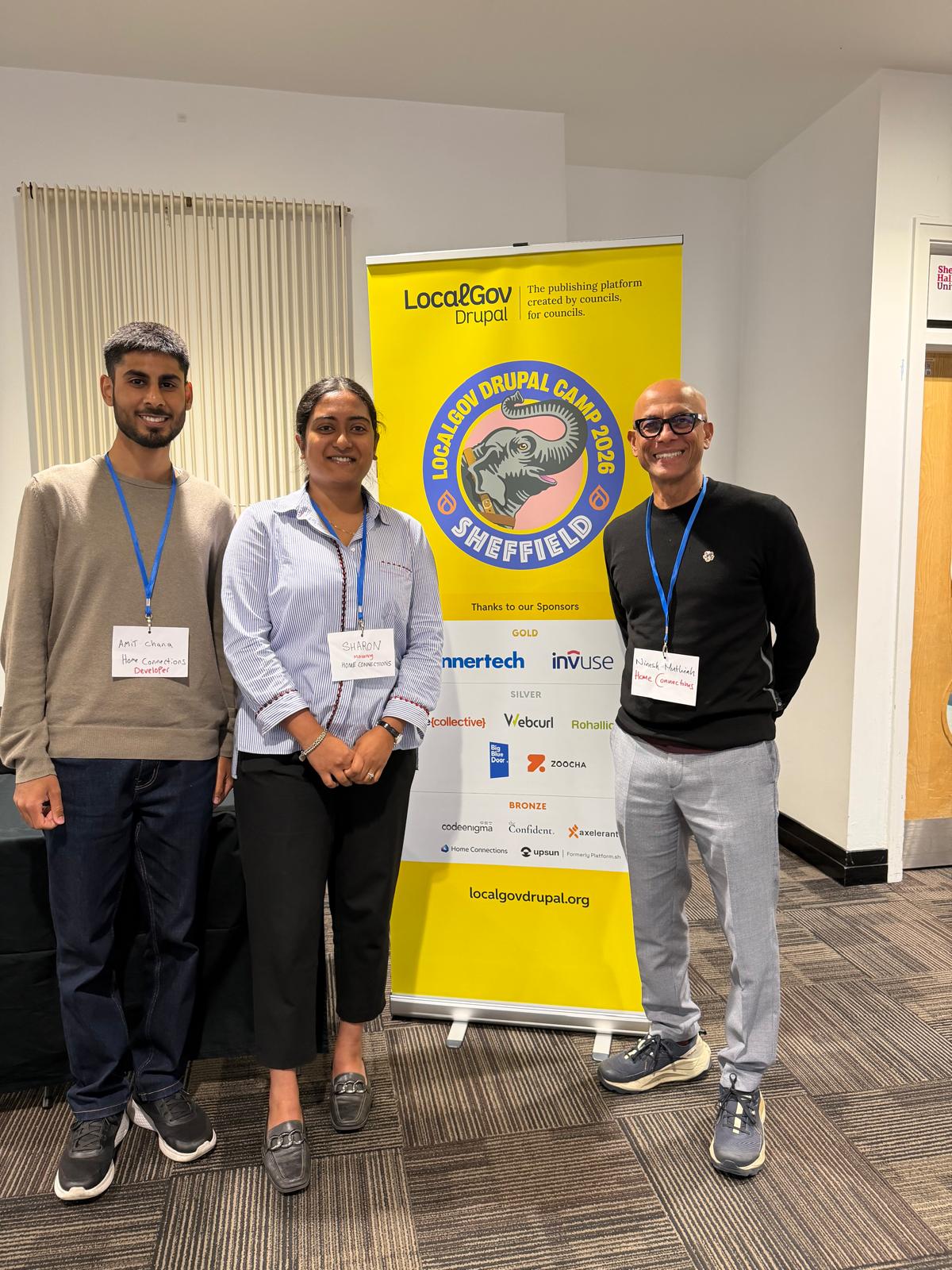
As a Bronze Sponsor of the event, Home Connections was proud to support the LocalGov Drupal community while also having the opportunity to meet councils, partners and fellow suppliers. We left Sheffield with fresh ideas, practical insights and valuable new connections that will help shape our future work with LocalGov Drupal and our customers.

Over the past few years, LGD has grown as a force for good in public sector website development. Councils can take control of their own destiny by carrying out the work themselves. Where in-house capacity is an issue, they can also obtain reasonably priced support from specialist suppliers such as Home Connections and others within the community. We look forward to contributing to the continued growth of the community.

Ninesh Muthiah, CEO Home Connections

The Home Connections team at LocalGov Drupal Camp 2026

A huge thank you to the LocalGov Drupal team, organisers, speakers and everyone who contributed to making the event such a success. We look forward to continuing to work with the LocalGov Drupal community and applying many of the ideas and insights we gained throughout the event.

Visit our latest website to launch, Crown Estate Scotland
Explore all of our LocalGov Drupal-powered customer websites.
Learn more about our web design and hosting services.

World Homeless Day: Building Pathways Out of Homelessness

woman holding child

Across the UK, the housing crisis continues to deepen. Record waiting lists, shrinking availability of affordable homes, and increasing demand for temporary accommodation are pushing more households into housing insecurity.

Amid these challenges, Homefinder UK, the national housing mobility scheme run by Home Connections, is providing a lifeline. By connecting individuals and families willing to relocate with safe, affordable, long-term housing, Homefinder UK is helping people break free from cycles of instability.

World Homeless Day and Homefinder UK’s Mission

Every year on 10th October, World Homeless Day shines a light on the realities of homelessness and the urgent need for lasting solutions. It’s a moment to recognise the scale of the challenge and the innovative approaches that are making a difference.

This day underscores Homefinder UK’s mission: helping people find the security of a home and the chance to rebuild their lives.

Whitepaper Coming Soon

Later this year, Homefinder UK will release a new whitepaper based on its most recent national survey of households supported through the scheme. The findings highlight both the scale of housing need and the transformative impact of relocation support.

Here’s a preview of what our upcoming whitepaper reveals:

  • Over half (54%) of respondents faced homelessness or eviction before turning to Homefinder UK
  • More than 1 in 5 had been searching for permanent housing for over 5 years
  • Respondents reported significant improvements, including better mental health, lower housing costs, and living in safer neighbourhoods
  • High satisfaction levels: Over 70% were ‘very satisfied’ with the support received from Homefinder UK

Fill out this short form to receive an update as soon as Homefinder UK's upcoming whitepaper is released.

Real Impact, Real Change from Housing Solutions in Action

Homefinder UK has helped more than 1,800 people and families relocate to safe, long-term housing – including over 230 survivors of domestic abuse and dozens of rough sleepers. The scheme works by helping those prepared to move to a new location by offering them to affordable and available housing in different parts of the country. For those who take up this option it can offer a route to permanent and suitable housing.

The Homefinder UK 2024/25 Impact Report reveals that the scheme provides direct relocation support and delivers substantial cost savings to local authorities. In 2024/25 alone, the scheme saved councils over £3 million in temporary accommodation costs, while maintaining a tenancy failure rate of less than 1% which is significantly lower than national averages.


Impact Report Cover

Download Homefinder UK's 2024/2025 Impact Report 

Sharon Roberts, Head of Lettings at Southern Housing and Chair of Homefinder UK said: “We know that a safe, secure home is the foundation for everything else – from education to employment and recovery - This impact is only possible because of our dedicated team, our local authority and housing association partners, and the individuals who trust us with their journey.”

StreetLink: Be the Link That Connects Someone to Support

Homelessness can affect anyone, and spotting the signs early can help save lives. Through StreetLink, members of the public can connect people sleeping rough to local outreach teams who can offer support, shelter, and safety. 

Since its launch, the platform has enabled over 219,000 alerts across England and Wales, each one a vital step toward ending rough sleeping.

This World Homelessness Day, StreetLink is also launching its new Impact Stories Hub — a space to read real stories of people helped through alerts, and to see how collective action creates real change.

If you see someone sleeping rough, make a StreetLink alert today at thestreetlink.org.uk

Together, We Can Create Pathways Out of Homelessness

World Homeless Day is a reminder that behind every statistic is a person and someone seeking safety, stability, and the chance to rebuild. Homefinder UK remains committed to turning that hope into reality by connecting people to homes that change lives.

With the continued support of Homefinder UK’s amazing partner local authorities and housing associations, it can expand the pathways out of homelessness and housing insecurity.

Are You a Local Authority or Housing Provider? Help Homefinder UK change more lives. Contact Homefinder UK.

World Homelessness Day: Helping People Find Support Through StreetLink

man sleeping on bench

Every year on 10th October, communities across the world mark World Homelessness Day – a chance to shine a spotlight on the realities of homelessness and explore how we can all make a difference.

In the UK, homelessness remains a pressing issue. It affects thousands of individuals and families, from those sleeping rough on our streets to people living in temporary accommodation or moving from sofa to sofa with no place to call home. Behind every statistic is a person – someone’s friend, parent, child – facing daily struggles that most of us can barely imagine. As the colder months draw in, it’s a timely reminder of the importance of compassion, awareness, and action.

The Reality of Homelessness

Homelessness isn’t just about the absence of a roof. It affects every part of a person’s life:

  • Health: Sleeping outside in the cold and damp leads to severe health risks, from respiratory illnesses to hypothermia. Life expectancy for people experiencing rough sleeping is tragically decades lower than average.
  • Safety: Many rough sleepers experience violence, theft, or abuse while on the streets. Each night is not only uncomfortable, but unsafe.
  • Mental wellbeing: Living without security or stability takes a huge toll on mental health. Anxiety, depression, and isolation are common, creating a cycle that makes it even harder to recover.

Across the UK, an estimated 272,000 people are experiencing homelessness. In England alone, the government’s most recent snapshot recorded 4,667 people sleeping rough on a single night in Autumn 2024 – a 20% increase from the year before. These numbers remind us that homelessness is not just a local issue, but a national challenge.

How StreetLink Helps

It’s easy to feel powerless when you see someone sleeping rough – but you can help. StreetLink is a national service that enables the public to connect people sleeping rough with local support.

Here’s how it works:

  1. Spot someone in need. If you see a person bedding down outside, or if you’re concerned about someone who may be sleeping rough, you can act.
  2. Send an alert. Visit StreetLink.org.uk. You’ll be asked for details such as location, time seen, and a brief description.
  3. Outreach teams respond. Your alert is passed to local homelessness outreach teams, who go out to find the individual and offer help. This may include emergency shelter, medical care, or longer-term housing options.

StreetLink doesn’t provide housing directly, but it plays a vital role in making sure no one goes unseen. Since its relaunch in September 2023, StreetLink has received over 219,000 alerts from the public, helping outreach teams connect with people sleeping rough and offer support that could change their life.

Real Stories: Case Studies Hub

This World Homelessness Day, we’re launching a new Case Studies page on the StreetLink hub. The page shares real stories showing the difference a StreetLink alert can make, highlighting the partnerships and people behind the work.

These stories bring the statistics to life – showing how alerts translate into real-world impact.

Impact Story: Ben and Cali

StreetLink’s impact can be life-changing. One powerful example comes from our partnership with StreetVet, which supports people experiencing homelessness and their pets.

When a StreetLink alert was made for Ben and his dog Cali, StreetVet volunteers were able to step in quickly. Cali received urgent veterinary treatment for a serious health issue, while Ben was supported with supplies and guidance so the pair could remain together safely.

This case shows how a single alert can spark vital support – not just for individuals, but also for the companions who mean the world to them. Read the full story of Ben and Cali.

How You Can Support This World Homelessness Day

  • Use StreetLink: If you see someone sleeping rough, don’t walk past. Take two minutes to send an alert via StreetLink.org.uk. It could change someone’s life.
  • Support local services: Donate to or volunteer with local charities and shelters that provide food, warmth, and longer-term support.
  • Show compassion: A kind word or small act of generosity can help someone feel seen and valued in a world where they often feel invisible.
  • Spread awareness: Share information about StreetLink with friends, family, and on social media. The more people who know how to act, the more people we can connect to support.

A Collective Effort

Homelessness is a challenge that requires everyone – councils, charities, volunteers, and the public – to work together. This World Homelessness Day, let’s remember that each of us has a role to play.

By raising awareness, showing compassion, and using StreetLink to connect people to support, we can make a tangible difference in people’s lives. Because no one should have to sleep rough.

Case Study: StreetLink & StreetVet – A Partnership Supporting People Sleeping Rough and Their Pets

man and dog

In February 2024, StreetLink and StreetVet launched an innovative partnership aimed at addressing the often-overlooked needs of people sleeping rough with pets. With up to one in four people experiencing homelessness in the UK accompanied by an animal, this initiative recognised the critical role pets play in their owners’ wellbeing — and the barriers they face in accessing support.

Through this new integration, members of the public and individuals self-referring can now indicate if they are accompanied by a pet when submitting a StreetLink alert. This directly triggers a notification to StreetVet, enabling a rapid response from their volunteer clinical teams to assess and support both the animal and their owner.

The impact

Since launch, over 240 referrals to StreetVet have been made via StreetLink, representing around 6–9% of StreetVet’s total monthly referrals. While only a small proportion of these lead to direct intervention, the wider impact has been significant — increasing public awareness, improving referral accuracy for outreach teams, and expanding access to care for a highly marginalised group.

As Collette Sheaff from StreetVet explains:

“Our collaboration with StreetLink has been impactful, ensuring that referrals received mentioning a pet come directly to StreetVet for investigation by our Clinical Team. This partnership has not only increased awareness of the vital support we provide for individuals experiencing homelessness with a pet but also allowed us to reach owners who may not have known how to find us before. Together, we’re making a meaningful difference.”

StreetVet’s support ranges from preventive and emergency treatment to providing food, toys, harnesses, blankets, and other essentials — helping owners maintain the companionship that is often central to their resilience and wellbeing.

Case example: Ben* and Cali

One powerful example of this partnership in action involves a referral for an individual named Ben and his dog, Cali. After a member of the public used StreetLink to highlight their situation, StreetVet volunteers conducted an outreach visit. Cali was found to be suffering from several untreated health issues, including a mammary mass requiring surgery.

Thanks to the StreetLink referral, Cali was promptly assessed, treated by a local veterinary practice, and continues to receive care. StreetVet also supports Ben with essential supplies and guidance, ensuring the pair can stay together safely and healthily. This case shows how early intervention through StreetLink can prevent worsening health conditions for both pet and owner.

Broader significance

This collaboration bridges a crucial service gap. Many vulnerable individuals are reluctant to access accommodation or healthcare if it means being separated from their animal companions. By ensuring pets are supported too, StreetLink and StreetVet lower access barriers to services and foster trust between outreach teams and those in need.

The partnership also encourages more meaningful public engagement. When people know their actions can help both a person and their animal companion, they are more likely to make a StreetLink alert and take part in community-led solutions to homelessness.

How you can help

Every action counts. You can support this initiative by:

  • Raising a StreetLink alert: If you see someone sleeping rough, submit an alert and include pet details if visible.
  • Sharing awareness: Tell others about StreetLink and StreetVet’s work so more people understand how to help.
  • Collaborating locally: If you work in housing, outreach, or animal welfare, explore partnership opportunities with StreetLink and StreetVet.

Together, StreetLink and StreetVet are reshaping how services respond to homelessness — proving that small, thoughtful innovations can create meaningful, lasting change.

*Please note: Names have been changed.

Back to top