Celebrating 25 years · 2001–2026
For 25 years, Home Connections has worked alongside local authorities and housing providers to modernise housing services, improve access to social housing, and help some of the most vulnerable households secure a place to call home. As the organisation celebrates its silver anniversary, it is an opportunity to reflect on the role technology has played in tackling homelessness and what the future may hold.
A Vision That Became Reality
When Home Connections was founded in 2001, the housing sector was facing growing demand, increasing complexity and mounting pressures on available housing stock. Housing services were often fragmented, heavily reliant on manual processes and difficult for applicants to navigate. Access to housing was tightly controlled by housing officials.
At the centre of Home Connections was a simple vision from its founder and CEO, Ninesh Muthiah:

Founder and CEO, Home Connections
“We wanted to use technology to offer choice and control to the citizen - especially in the advertising and letting of social housing. We wanted to put the housing applicant or customer in the driving seat by making them aware of what was available and letting them make the decisions. We wanted to take power away from local government officials and cede it to those who would live in the housing.”
Now Home Connections supports over 100 local authorities and housing associations across the UK. The company is uniquely owned and controlled by its customers and run on a non-profit basis.
Transforming Housing Through Choice
One of Home Connections' earliest contributions to the sector was the introduction of Choice Based Lettings (CBL) software. In 2001 housing professionals were sceptical that an IT-based system could be used by housing applicants to research and select a home of their choice. On 4 July 2002, Home Connections proved it would be successful with the first move being facilitated using CBL.
Today, Choice Based Lettings is regarded as an established part of social housing allocations, but twenty-five years ago it represented a significant shift in thinking. Instead of applicants waiting for allocations, CBL gave people visibility of available homes and the opportunity to express interest in properties that met their needs.
The result was a more transparent system that empowered applicants while helping housing providers manage allocations more effectively.
Technology Supporting the Fight Against Homelessness
The homelessness challenge facing the UK has changed significantly since 2001.
At a Home Connections conference in 2016, Bob Blackman, the MP behind the Homelessness Reduction Act 2017 (HRA) set out a vision for housing professionals to not just respond to homelessness but to actively prevent it.
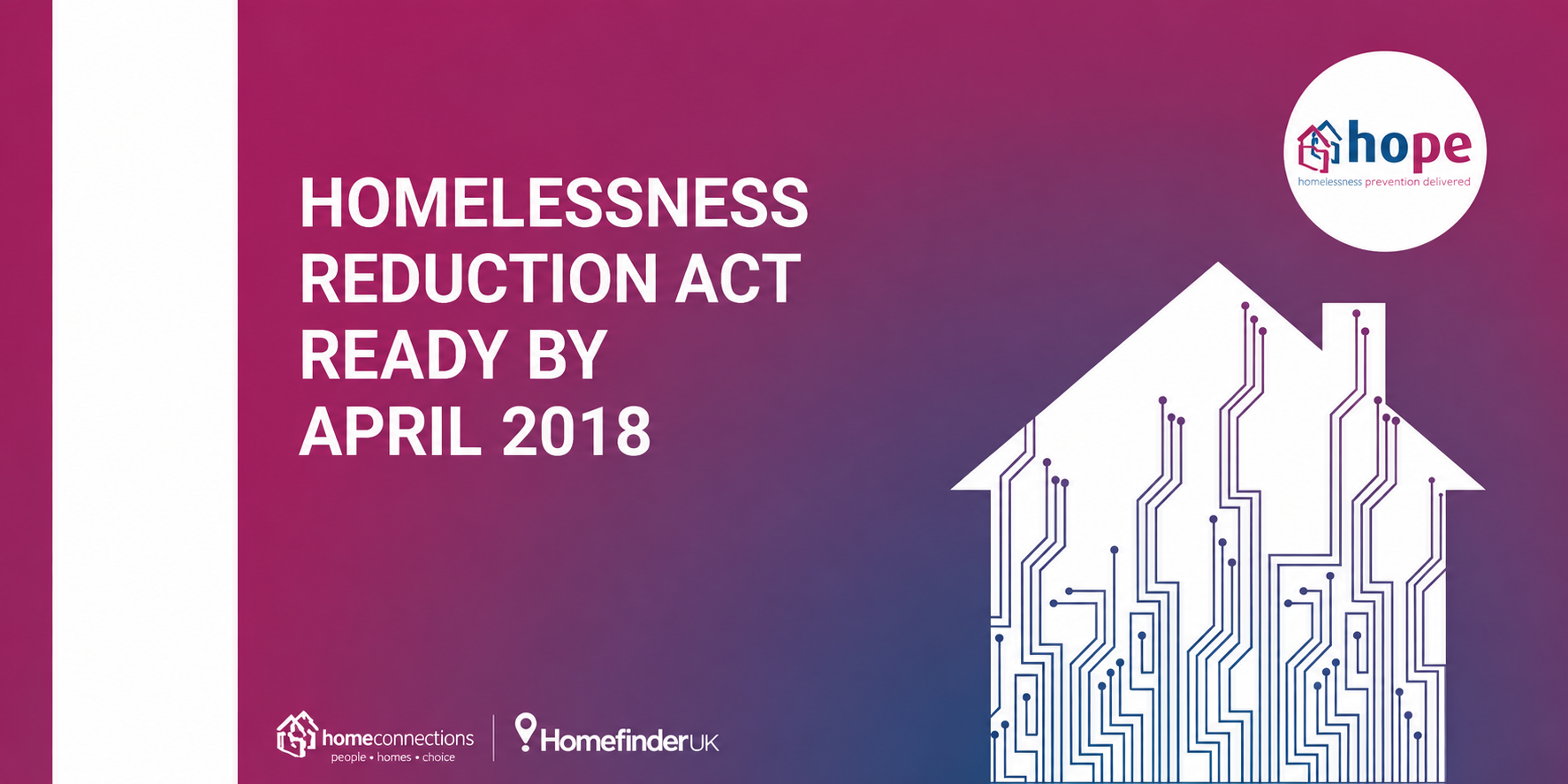
The shift under the HRA, which came into force in April 2018, was toward early intervention, personalised support and helping people avoid crisis before it occurs.
Home Connections rapidly developed a homelessness case management system, called HOPE, to support homelessness prevention and deliver personalised housing plans and statistics to central government. One of the few companies to develop software so quickly.
The company's philosophy is that technology should support people, not replace them.
Housing officers, homelessness teams and support workers remain at the heart of service delivery. Digital tools simply help them work more efficiently, access better information and focus more time on supporting residents.

Looking Beyond Local Boundaries
One of the most significant lessons learned over the past 25 years is that housing solutions often cannot be solved within a local authority area. This is because social and affordable homes are scarce, particularly in high-demand areas, and less than 5% of private housing in the UK is affordable within Local Housing Allowance (LHA) rates.
From the outset, Home Connections sought to widen the options available to home seekers. It created a series of Housing Options ‘Wizards’ – online tools that aggregated all available housing options inside the borough and nearby.
It also established Homefinder UK, a national mobility scheme developed through a partnership of councils and housing associations.
Uniquely, Homefinder UK is the only service that offers the opportunity and hope for people to find social or affordable housing in other parts of the UK with personalised help from a case manager.
To date, more than 2,000 households have found secure permanent affordable housing through Homefinder UK, including many vulnerable households and survivors of domestic abuse – with a tenancy failure rate of less than 1%.
These achievements highlight the value of partnership working and reinforce the principle that tackling homelessness requires cooperation across local authority boundaries.
Having led the organisation for 25 years, Ninesh’s reflection on the journey remains remarkably simple:
“We had a vision and remained faithful to it and in the process have helped tens of thousands of people out of housing poverty through a variety of platforms”
Ninesh Muthiah
Founder and CEO, Home Connections

Innovation Rooted in Social Purpose
Although Home Connections is widely recognised for its software, its work has always been driven by social impact. It has sought to make public services easier to access through language and accessibility options and a range of channels, including the internet, digital TV, text bidding, automated telephone services (IVR) and mobile apps.
From 2004/05 virtual tours and virtual reality were introduced to offer greater transparency.
Considering the socio-economic plight of housing applicants and tenants, Home Connections introduced connections to skills, training and jobs by integrating job feeds to the software. A lot of effort was put into preventing homelessness such as programmes to support cognitive behavioural therapy (CBT) to prisoners and then offering a job and a home on release. This helped establish a stable life and thereby prevent homelessness and recidivism. These past initiatives are relevant and replicable today under the new Andy Burnham (Labour) government.
To support survivors of domestic abuse (DA), Ninesh established Revive, a specialist branch of Homefinder UK. To date, it has rehoused more than 300 survivors in permanent homes across England and Scotland.
Winning a Mayor of London’s tender in 2009 led to the creation of the London Accessible Housing Register standards which have been widely emulated across the country. In partnership with Habinteg, Home Connections delivered Accessible Now, a channel of Homefinder UK dedicated to offering homes to wheelchair users.
In the autumn of 2026, the eradication of rough sleeping became the first directive of new prime minister Andy Burnham. Home Connections manages the StreetLink alert service for the MHCLG and has developed Rough Sleeper management software to better support rough sleeping case management and outcomes. Home Connections has also embraced the power of AI, which has been integrated into the StreetLink system which helps to locate reported people who may need help urgently.
Looking to the Future
Over the next twelve months, Home Connections will mark its anniversary with monthly themes exploring how technology, policy and partnerships can help address the challenges facing housing services.
These themes will include:
- Ending rough sleeping
- The future of Choice Based Lettings
- Government partnerships and contracts
- Housing mobility
- Homelessness prevention
- Digital transformation
- Social impact and outcomes
- Cross-sector collaboration
A Legacy of Housing Innovation
For 25 years, Home Connections has helped shape housing services across the UK. Behind every allocation, homelessness prevention case and successful move is a person whose life can be changed by a stable home.
The vision that inspired Home Connections in 2001 continues to guide its work: using technology and working with housing providers to help more people access safe, secure homes and prevent homelessness.