Cutting 8 Legacy Systems Down to 3: How Redbridge Transformed Its Housing Services

A case study interview with Laura Kennard (Redbridge Council)
The challenge: fragmented systems, unreliable data
Like many London boroughs, Redbridge is under significant pressure across its housing services. With one of the highest temporary accommodation caseloads in London and costs increasing across the board, the Council needed to get a firmer grip on not just its costs, but also its data and processes, with the challenge stretched well beyond homelessness alone, touching the housing register, choice-based lettings and asset management too.
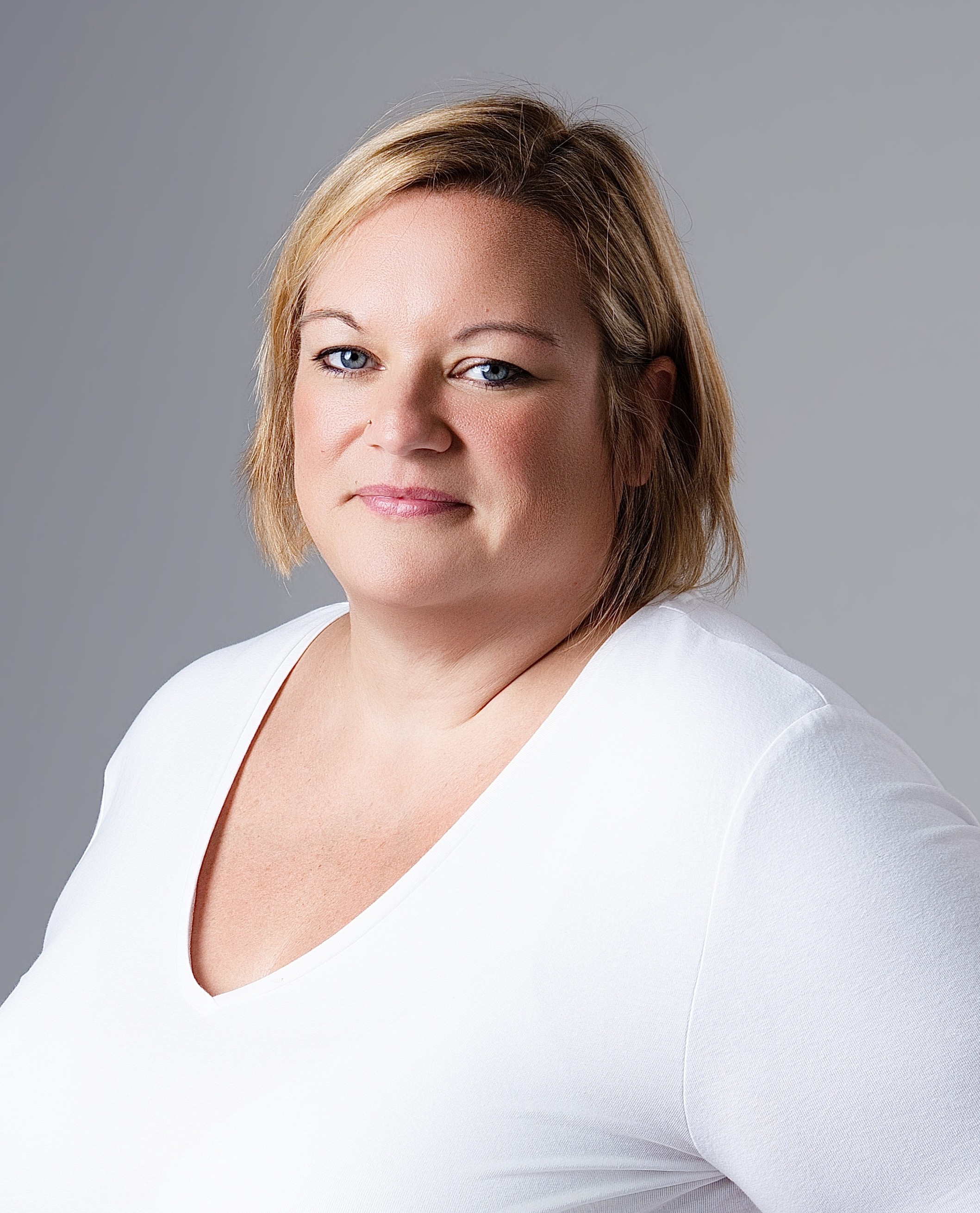
Laura Kennard, who has led the project from the council's side, explains what prompted the search for a new solution:
"The teams weren't using the systems properly. We already had Homelessness Case Management system, HOPE, in place, but it wasn't being used very well. In addition to that, we had another system that we used for housing register and Choice Based Lettings (CBL), but we were part of a partnership which made it tricky for us to be able to manage our own destiny around that. In addition to that, we also had an internal system that was built using an Access database many years ago called TASYS, that was no longer supported, very old, very much in need of replacement.
Because it was so bespoke and in-house built, it was hard trying to find a solution that would do what we needed it to do in a challenging market. Redbridge have one of the highest Temporary Accommodation (TA) numbers in London, so homelessness and the systems that we use are quite critical. The overarching strategic goal is to reduce the spend on TA across the council - one of the ways to do that is to have better platforms, better data and better processing in place. So that was what we were trying to achieve"
The solution: integration without manual intervention
When asked how the new platform achieves this, and which features have made the biggest difference, Laura points to integration:
"The biggest aspect of what we needed was the ability to allocate people into TA, which is what the Home Connections Home Match system gives us. A key aspect of that was that it was integrated into our housing management system. [This is] so we can manage the asset part and we can manage the rent account part through a journey between the two systems, but it's all triggered through integration, and there's no manual intervention of updating records, which previously caused mismatch of data [and] incorrect H-CLIC submissions.
The ability to get a straight answer to how many people we had in TA became very dependent on the system you looked at, and which view you had, whether you came in it from rent account or whether you came in it from placement. So, the ability to have fully integrated solutions has streamlined that process no end. We had a sign-up process previously that involved staff having to manually update nine systems to complete that process from start to finish. That has now reduced down to one."
Laura is candid that the change hasn't been easy for everyone:
"There's still some automation bits we're looking at, but [it's] a huge reduction, and actually what it's done is made our data more robust. We've had challenges since introducing this. For the staff, it's been a culture shock of... you can't just do it outside the system anymore. You can't take numbers off a local spreadsheet and report those. If you're working from emails, working from outside solutions, we're not accurately updating our data. So, it has been a shift for the teams, and I know some have kind of struggled with the restrictiveness of integration.
However, that sign-up process was taking four hours from start to finish and from a system side we've now got that under an hour end to end. Obviously, you're always going to have more complex cases [that take longer]. It's also helped us identify some massive issues with the way our data was reporting and how the systems were being used. So, we're still unpicking a lot, but it has given us a lot of good data to work with."
The impact: better data, better decisions
Redbridge has gone from eight legacy systems and streamlined that number down to three, one of which is Home Connections' platform, affecting around 250 staff members across 7–8 departments.

"By having better understanding of our data, better information in front of us, better decisions can be made. One of the things that we've now started doing is building all of the dashboards and the Power BI from that data. We've got some exciting and really interesting dashboards from that.
You must commit to it. It's not for the faint-hearted. You've got to really want to change fundamentally at its core, and that's what this has done. It has transformed the way staff are working."
What it means for residents
Asked what difference this makes from a resident's point of view, Laura says:
"It streamlines our process, which gives the staff more time to be able to work with residents directly. It also means that we are using council money better, using our resources better because we are on top of what we're doing.
For the individuals that are unfortunately affected by homelessness, it means that we are holding more accurate records and can support them in a more robust way, no matter what department they're talking to."
Working with Home Connections
On the relationship with Home Connections as a vendor, Laura is warm but honest about the friction along the way:
"Home Connections have always been really receptive to the ideas of what we're doing. We did push the boundaries quite a lot with this solution and what we were asking for. We've come with a problem, we've worked together to try and find a solution that is supportive. There have been some challenges along the way. The original solution we were looking for wasn't quite what we ended up with, but actually I think we've ended up with something a bit better because of that."
Dave Anteh, from Home Connections, reflects on how the scope of the work grew:

"Often I am involved with customers who tinker around the edges - which are about improving a small part of the process but actually missing a wider picture. This is where Redbridge have been more ambitious and committed to finding an overall solution improvement.
We've pushed the boundaries of what [Home Connections] do, specifically to help Redbridge, but more importantly to develop our offering to other customers as well. So, everything we're doing here benefits other customers also."
Laura agrees that the dependency of the systems created its own pressure:
"It's that dependency when you're talking integration that then becomes the dependency on a wider programme. What we've delivered between ourselves and Home Connections has been huge. From a Redbridge perspective, it affected 250 users across the council, across 7 or 8 different departments. This was huge for all involved."
Despite the challenges, her recommendation is unequivocal:
"Absolutely, I'd recommend Home Connections, and how we've worked and what you've delivered for Redbridge."
Measuring success
For Dave, success is judged on several fronts:
"Has the business improved? Has it reduced the use of spreadsheets? Customer satisfaction is key, but it can vary across your modules. A key part of success has been maintaining the trust of the council to do more with us. For Home Connections, everything we do is about that person who comes into the local authority on a Friday evening [and says] they're homeless - and ensuring they get the support and help they need in time."
For Laura, the measure of success is more personal:
"I might work in IT, but my job is about people. It is about people from start to finish. If we have done something and delivered something that makes someone's job easier, gives them better data to be able to make decisions, and is user-friendly, then that for me is success. We've achieved what we need to do. It's about the people, residents and those using it. The staff have an incredibly difficult job, managing homelessness cases is not an easy thing. They need tools that they can rely on that support them and make their lives easier. So I think as long as I've done that, then I'm happy. Can't please everyone, but hopefully majority I've got there."

What's next
Redbridge is preparing to relaunch HOPE and is exploring AI for triaging new forms, building on a pilot already underway for StreetLink.
"We've still got some good stuff to come, and the more automation and improvement work. I think that's the stuff that will really change. But the fact that we are about to relaunch HOPE as well, I think, that's long overdue.
In an ideal world, I would have liked to have done that first, because from the TA side, it's the starting point - if you get that right, it goes through. But you have to make some difficult decisions at certain points, and we had to stop that work so we could focus on the new CBL system, Home Match, and everything else."
Laura's advice to other councils considering a similar transformation
"Don't be afraid to look at it with new eyes - Really be sure about how everything hangs together. It's very easy to cherry pick little bits, and with that you see little change. But if you're looking for big change, you do have to go drains up and look at everything. Not every part of that will change, but you need to understand it all to know where you're going.
Just know what you're getting into, because a programme of this size and scale is huge, and you've got to be committed to it. Otherwise, it will fall flat on its face."
Considering a similar transformation?
Talk to our team about how an integrated approach to housing management could work for your council.
Related Stories



World Homeless Day: Building Pathways Out of Homelessness